


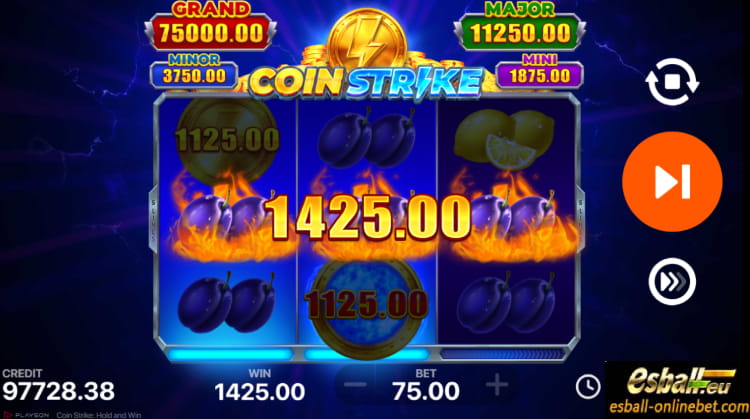
Autoplay settings in Coin Strike Hold and Win Slot control how many consecutive spins run without further input, which directly affects session length and bankroll management. UK players often use these controls to keep consistent stake levels while monitoring volatility and bonus triggers. Understanding the available options, limits, and stop conditions helps prevent unintended long runs and keeps play within personal budgets. This guide examines each setting in detail, showing how to adjust them for different session goals without risking manual oversight.
Ending Criteria: Single Win Limit
The individual win cap stops autoplay when one spin pays out a payout at least the selected limit. Typical values span from 20x to two hundred times the current stake, adjustable in increments that match the game’s paytable. Configuring this cap at fifty times the stake, for instance, halts the game after a moderate line hit and prevents larger swings from eating into prior profits. The condition is limited to the base game; bonus feature payouts are evaluated separately. As Coin Strike can produce occasional high-value coin combinations even without the feature, a carefully set per-spin cap also guards against sudden tsn.ca jumps that surpass desired session limits.
Adjusting the Individual Win Cap for Differing Wagers
At the minimum stake of twenty pence, a fiftyfold threshold comes to ten quid, a practical goal for numerous British players. Upping the wager to one pound increases the same limit to fifty quid, mirroring the greater risk per turn. Adjusting the threshold proportionally to stake size keeps session goals steady irrespective of wager size. Users who often alter bets should verify the limit on each occasion to stop from ending too soon or allowing excessive continuation. A quick mental check—times the bet by the selected factor—requires just moments yet prevents mismatched limits that could truncate gaming sessions or subject the bankroll to bigger variance than intended.
Common Autoplay Mistakes and How to Avoid Them
One frequent error entails configuring a high spin count in the absence of setting any stop conditions, letting variance to run unchecked for prolonged periods. Another happens when players modify stakes mid-session but neglect to update the single win limit, resulting in stops that no longer match the new risk level. A third mistake is overlooking the turbo speed setting, which can execute spins faster than expected and exhaust a planned session in minutes rather than the intended duration. Examining all panel fields before activation removes these oversights. A quick checklist—spin count, single win limit, balance stops, speed, and sound—takes less than thirty seconds yet avoids the majority of unintended autoplay behaviour noted by UK players.
Effective autoplay configuration in Coin Strike Hold and Win Slot finally rests on matching spin count, stop conditions, and speed to a clearly defined session goal. Players who approach each block as a controlled experiment—noting starting balance, chosen parameters, and final outcome—acquire repeatable data that shapes future adjustments. Before the next session, access the autoplay panel, choose a modest spin count with balanced win and loss limits, and check the speed setting aligns with your observation needs; this single preparatory step changes autoplay from a passive convenience into a deliberate bankroll-management tool.
Choosing Spin Count and Session Duration
Choosing an suitable spin count involves deciding how long a session should continue at the selected stake. Ten spins offer a short test run, while fifty or one hundred spins are ideal for longer observation periods. The game instantly stops once the picked number completes, reverting control to manual mode. Players who like shorter bursts often select twenty spins, allowing time to review balance changes and bonus frequency before committing to another block. This measured approach encourages disciplined bankroll tracking without constant button presses. Session duration also depends on reel speed; turbo mode can complete one hundred spins in under two minutes, whereas standard speed stretches the same count to roughly eight minutes of continuous play.
Adjusting Spin Quantity with Battery and Data Use
Mobile sessions use both battery and data, so higher spin counts should account for device limitations. Choosing fifty spins at moderate speed generally takes less than five percent of a modern smartphone battery, yet extended runs on older devices may deplete power faster. Data usage stays low because each spin sends only outcome data rather than full graphics. Setting a conservative spin count therefore protects against unexpected interruptions while still offering the statistical sample needed to assess game behaviour. Players on older handsets often cap autoplay at thirty spins to avoid mid-session shutdowns that could interrupt bonus rounds already in progress.
Understanding the Autoplay Panel Arrangement
The autoplay panel sits beneath the spin button and presents a numeric field for selecting total spins, usually spanning from ten to one hundred. Adjacent toggles enable players to activate or turn off the feature instantly, while a small gear icon reveals advanced conditions. UK-licensed sites show this panel in the same location across desktop and mobile views, guaranteeing consistent access. Familiarity with the layout avoids accidental activation during quick manual sessions and minimizes the chance of unintended extended play. The panel also provides a live preview of the current stake, so players can verify their bet size before committing to a long block of spins.
Volume and Alert Controls Within Autoplay
Autoplay respects the global sound settings yet adds an optional win chime toggle that plays only when a spin meets the single win limit. This auditory cue alerts players who leave momentarily without pausing the session. On mobile devices, enabling system notifications for large wins can supplement the in-game chime, though UK regulations require that such notifications remain non-intrusive and respect silent-mode settings. Checking both toggles before starting a long run eliminates missed alerts or unwanted noise. Some players also reduce overall game volume to a whisper while leaving the win chime active, striking a balance between discretion and timely awareness of significant outcomes.
Responsible Use and Play Tracking
UK-licensed platforms record autoplay usage within the safe gaming section, showing total spins, duration, and net result for each completed block. Reviewing these logs after every session shows whether chosen spin counts and stop conditions match intended budgets. If logs indicate frequent early stops due to balance decrease limits, lowering the stake or shortening the spin count may generate more stable sessions. Conversely, consistent early stops from single win limits https://bleacherreport.com/articles/2676145-philadelphia-eagles-vs-seattle-seahawks-betting-odds-analysis-nfl-pick imply the threshold could be increased without compromising overall bankroll discipline. Over several weeks these records create a personal performance database that emphasizes which parameter combinations deliver the steadiest results across varying stake levels.
Speed Options and Animation Settings
Three velocity settings—normal, coinstrikeholdandwinslot betting app great britain, fast, and extreme—alter reel-stop timing and animation length. Normal speed equals the manual spin rate, offering complete visual response. Fast mode reduces reel travel while keeping symbol visibility, appropriate for gaming sessions where users still desire to observe almost-win patterns. Ultra-fast mode strips most animations, ending each round in below one second, which maximises the number of outcomes within a fixed time window but diminishes visual information per spin. The selected speed also impacts how noticeable near-miss patterns get; ultra-fast mode compresses these visual hints, rendering it more difficult to assess whether the game is clustering high-value symbols or just running cold.
Selecting Speed Depending on Observation Goals
Players analyzing symbol distribution or monitoring coin showings gain from regular or rapid modes, as both preserve sufficient animation to recognize trends. Extreme mode fits volume testing where only final credit totals count, such as checking the influence of diverse wager levels on total return. Switching between velocities in the middle of a session is achievable by pausing auto-spin, changing the setting, and restarting; the leftover spin count stays intact, guaranteeing consistency of the scheduled sequence. A practical routine is to start at regular speed for the initial twenty spins, then move to rapid if the initial results appear stable, keeping both precision and productivity within the same autoplay block.
Termination Criteria: Rising Balance and Decrease
Balance-based stop conditions measure the net shift from the starting credit when autoplay started. A balance increase stop of twenty percent stops play once the credit climbs by that margin, preserving gains before variance negates them. In contrast, a balance decrease stop of fifteen percent terminates the session if losses reach the preset amount, protecting the remaining bankroll. Both percentages are calculated on the initial balance shown at activation, not on subsequent changes within the run. These percentage rules operate with the single win limit, creating layered protection that handles both sudden spikes and gradual erosion of funds.
Real-World Examples of Balance Stops in Action
Imagine a player starts with a one-hundred-pound balance and sets a twenty-percent increase stop. Autoplay will end once the balance attains one hundred twenty pounds, without regard to individual spin outcomes. If the same player enables a fifteen-percent decrease stop, play stops at eighty-five pounds. These concrete figures show how percentage-based rules convert into actual pound amounts, allowing precise budget control without manual monitoring after each spin. Jotting down the starting balance on paper or in a phone note before pressing start eliminates any doubt about the exact trigger points once the reels begin turning.
Special Feature and Bonus Round Handling
Coin Strike Hold and Win Slot offers a Hold and Win bonus initiated by landing six or more coin symbols on the playing field. When autoplay is enabled, the game immediately enters the bonus round and finishes it entirely before continuing the remaining base spins. No separate toggle can be found to avoid or reduce the bonus; still, players can choose a single win limit adequate to halt autoplay if the bonus generates a substantial payout. Understanding this relationship avoids unexpected prolongations of playtime during profitable bonus sequences. Because the bonus itself can retrigger additional spins, a single bonus entry may take ten to fifteen extra spins beyond the original count, so players should account for that margin when selecting total autoplay length.
Monitoring Bonus Frequency During Extended Runs
Statistical examination over several hundred spins shows that coin symbols appear about once every forty spins on average, though short-term variance can create groups or gaps. Setting an autoplay block of one hundred spins therefore gives a fair chance of experiencing at least one bonus trigger. Players who want to examine bonus activity particularly may perform multiple shorter blocks in place of one long session, clearing the counter each time to maintain uniform data collection intervals. Holding a simple tally of bonus entries versus total spins aids determine whether the observed frequency corresponds to personal expectations or indicates a temporary deviation worthy of attention for future sessions.

